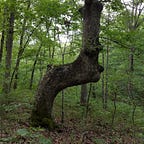

Being dependent on something that is not dependable creates vulnerability. At risk of being harmed or exposed, being vulnerable is uncomfortable and can be dangerous. Whether physically or emotionally vulnerable, our wellbeing is in jeopardy if placed on risky dependency.
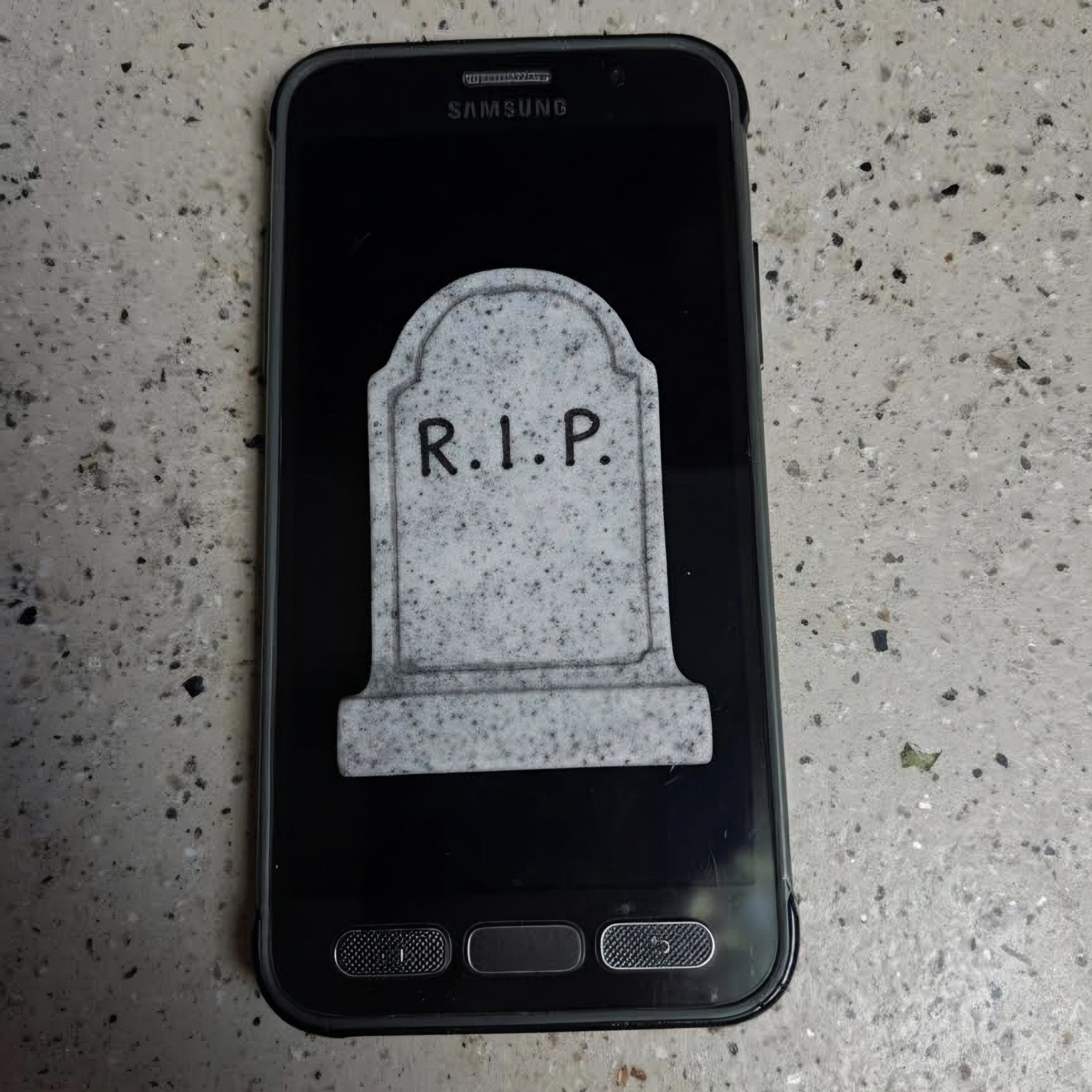
Note about the image. I took this picture of my old phone with my new phone. I used the AI in the new phone to create the tombstone on the photo I took. Crazy!
My Mysterious Mind
A few days ago, there was a sudden death in my world. After ten happy years together, my Samsung Galaxy S7 smartphone died and could not be resuscitated. There was no warning. One minute it was fine and happily charging; a few minutes later the screen was black and the phone unresponsive. Suddenly, without warning, I felt disconnected and vulnerable.
I tried without success to force it to awaken. Then I used my laptop to order a replacement. I chose based on color and how quickly a phone could be sent. The cobalt purple Samsung Galaxy S26 in my cart, I paid an extra $12.99 so the phone would arrive sooner.
The next few days were weird and slow. At times I felt naked and afraid. At other moments there was a deep sense of freedom in my being. No longer enslaved by the notifications of a small electronic device, I could just be. I couldn’t check the time or search the Internet, but did I really NEED to?
The strange space without a phone provided a context for pondering vulnerability, for ways in which I might have developed dependency on something not dependable. Such reliance on the unreliable is risky, potentially leaving me exposed and vulnerable. What, I wondered, do I have trouble living without? To what do I depend on for a sense of peace and stability? Or put another way, what, when lost or threatened, triggers panic or insecurity?
Our phones. Our bank accounts. Electricity. Air conditioning. Our cars. The Internet.
As modern humans we have grown dependent on many things for our lives to function. A century ago, dependency was very different. People lived simpler lives in closer communities of mutual dependency. Many gathered regularly for worship in a local church. There was a network connecting them, not phones connecting them to “the” network. In the quest for what is faster and easier, humans have created a fragile life built on risky dependencies. Lost without our phones. Frightened if our investments decrease in value. Paralyzed if the “power” goes out in a storm. Panicked when the car won’t start. Confused when we can’t access the internet or GPS navigation.
We have become vulnerable, dependent in a myriad of risky ways. Have we forgotten how to be OK without all of the stuff that promises to make life better?
Message of Mystery Acres
I was in the forest for two days and one night without a phone. My husband and two friends each had their phones. One might think that three phones for four people would be enough, however, I felt odd without a phone. This was especially true when the sky became dark and the possibility of rain approached. Two of the three phones were pulled out to check the radar.
I leaned back in my lawn chair and sighed. Could we not just relax, watch our surroundings, and wait to see if we got wet? The sky was displaying a magnificent array of cloud shapes in pink and grey hues. Would it be so terrible to just rest in the wonder and majesty of it all, without the tiny slavedrivers in our hands?
Or maybe I just felt left out.
The running joke over my days-without-phone was, “I would blank, but I don’t have a phone.” Versions included: I could check the time, take a picture, consult the internet, etc., but I don’t have a phone. My husband and friends added their version, “you could blank, but you don’t have a phone” or “I could blank (for example, text, send you a picture, etc.), but you don’t have a phone.”
I wanted to be OK without a phone, to not feel vulnerable without the device upon which I had become dependent. Humans thrived for millennia without smartphones, surely, I could be OK for a few days.
Smartphones aren’t the only recent dependencies. Electricity. Cars. Air conditioning. The Internet. Roll back the calendar to a century ago and most humans were thriving without any of these modern conveniences.
Prior to the 1800s, camping wasn’t a recreational activity. For most humans, camping was a lifestyle of survival. In the early 1900s, as modern life became more encumbered with technology and people were crowded in cities, the escape into the national parks became a popular pastime. The history of camping has a long era of survival and a very brief, recent period of recreational vehicles and campgrounds. Camping in cars evolved to small motorhomes until today when massive campers and RVs boast all the modern conveniences of the places humans used to camp to seek a time away from.
Mystery Acres, as we develop it, has most of the comforts of home. It only lacks an unlimited water source for a hot shower and a power love seat recliner. And, during my recent visit, it was missing one smartphone. Mine.
All of which leaves me pondering what Mystery Acres is trying to tell me and how I might be blocking the message. The more complicated support structures I need for my time in the forest, the farther away from the beautiful simplicity of nature I might be straying. Electricity and air conditioning don’t make the forest better, just easier to be there. And smartphones and the Internet are not only unnecessary but also might be detracting from what the forest has to offer.
The message of Mystery Acres is this: Needing more than the forest when visiting there is a risky dependency. Food and shelter are necessary; access to the Internet is not. Is the answer becoming less dependent, or finding what is more dependable?
Ancient Mystery’s Voice
“Depend on the Lord, the Rock eternal.” (see Isaiah 26:4)
I wrote in my journal several times while waiting for my phone to arrive. The words of an old hymn played repeatedly in my mind, bringing me security in a place of vulnerability.
“Rock of ages cleft for me, let me hide myself in Thee.”
The words of this hymn were published by Augustus Toplady, an ordained minister for the Church of England, the same year the Declaration of Independence was authored and signed in the rebellious British colonies. Legend tells of a storm during which Augustus hid in the cleft of a large rock. With the battle for independence, the historical context of the hymn was a stormy, vulnerable time. Enraged by their risky dependency upon Britain, the colonists were willing to pledge themselves to whatever it took for independence.
“Rock of ages cleft for me, let me hide myself in Thee.”
I don’t like feeling vulnerable, depending upon what is not dependable. Yet so much of my physical existence is dependent upon what could be hacked or destroyed. Except for an envelope of emergency cash, my money is just numbers stored at financial institutions. Most of my existence depends on these numbers. I feel more secure when these numbers go up, less secure when they go down. But I’m vulnerable all the time because of dependency on money that’s just numbers in a computer. My pension. My retirement savings. My checking, savings, and money market accounts. All just numbers stored in server farms, backed up by numbers in other server farms. I’m financially dependent on “1’s” and “0’s” the code of computers. Thieves and hackers relentlessly try to access these fragile numbers.
“Rocks of ages cleft for me, let me hide myself in Thee.”
Some financial planners suggest buying gold – but people cannot eat gold. What may have value now may not have value in the future. I’d rather depend on what cannot change, on what nothing can destroy or steal, on what has unchanging value.
“Depend on the Lord, the Rock eternal.”
He is the source of all good gifts. The money I need, He provides. From the riches of a King, the King of Kings, He provides for me, an heir to His kingdom. I am blessed with royal treasures and protected by armies of the King’s angels.
My phone died unexpectedly. But God was not surprised. I felt vulnerable but I was not in any danger. I’d grown dependent but my need for a phone was an illusion. I was vulnerable because I lost my usual way of calling or texting people. I also didn’t have a camera. But was I in any danger without my phone? After all, I raised three children without the Internet!
Ancient Mystery’s Voice invites dependency on the One who is strong, immovable, and eternal. Such dependency isn’t risky because the Lord as our Rock protects us from vulnerability.
Living in Mystery
What does it mean to live in the mystery of vulnerability, placing dependency where it is risky? This message is a cautionary one. It starts with assessing where you are at risk of becoming vulnerable because your dependencies lie upon what is not dependable. What in your world, if lost or threatened, activates a sense of panic? Phones, cars, electricity, and bank accounts can be gone in a moment.
Recognize your basic vulnerability. Being mortal is risky; being in the modern world has additional risks. Our bodies are fragile, at risk of injury and illness. Our stuff is subject to malfunction, theft, and destruction. Clinging to the stuff of life is risky.
Find what is more dependable; depend on the Lord, the Rock Eternal. When your phone dings, use it as a cue to pray before checking the notification. Before you start your car, say a prayer for the Lord’s blessing on your day’s journey. When you flip an electric switch, send up a prayer to the Light of the World. As you pay your bills or check your bank statements, ask for the Lord’s help to be a good steward of what He has provided.
Depend on the Source of the stuff, not the stuff. The practice of gratitude for the things on which our lives depend helps us remember their provider. Thank You, Lord, for my phone. Thank You, Lord for my car. Thank You, Lord, for electricity. Thank You, Lord for the money in my accounts. Thank You for being the provider of all that I need.
Practice being OK without stuff. Take a walk without a phone or smartwatch. Sit and listen to the birds. If you feel too vulnerable, grab a physical Bible and rest it on your lap. As a side note, I don’t read the Bible on my phone. I don’t want to depend upon something undependable to hear from the One who is Dependable. It just seems wrong to me.
As vulnerable humans we too often place our dependency where it is at risk of failing us. Being vulnerable is unavoidable; we can choose to place our dependency on the One who is eternally reliable, the Lord, the Rock Eternal. We can practice transferring our dependency to Him by using our stuff as a reminder to pray and be grateful. Instead of being enslaved by our stuff, we can practice being free of it. We become less vulnerable by depending less on what is just stuff, and more upon the One who is completely dependable.
Connecting with Mystery
Dear Lord of All Mystery, I am uncomfortable realizing how vulnerable I am, how dependent upon unreliable stuff I have allowed myself to become. Remind me to thank You for my stuff and to pray, transferring my risky dependency to You, my Rock Eternal upon Whom I can depend without risk. Thank You for being my totally reliable Lord. Amen.
Notes from Dr. Mac
If you want to do your own investigation of any of the scriptures I use, try Bible Gateway. Do a search for the word “rock” and find solid foundations for placing your dependency.
Do you want more from my writing? Please visit my ARCHIVE (link and QR code provided).
You can also connect to Mystery’s Voice on Spotify (link provided).
Please pass on this message to friends and suggest they subscribe. It’s free!
I love to find out what you’re thinking! Join the chat through the button below. I love hearing from you!